
The Ultimate Guide to Boxing, Kickboxing, and Muay Thai
Article by : Zawen Anwar
Kickboxing Master Trainer, Combat Strength and Conditioning Specialist, ACE CPT
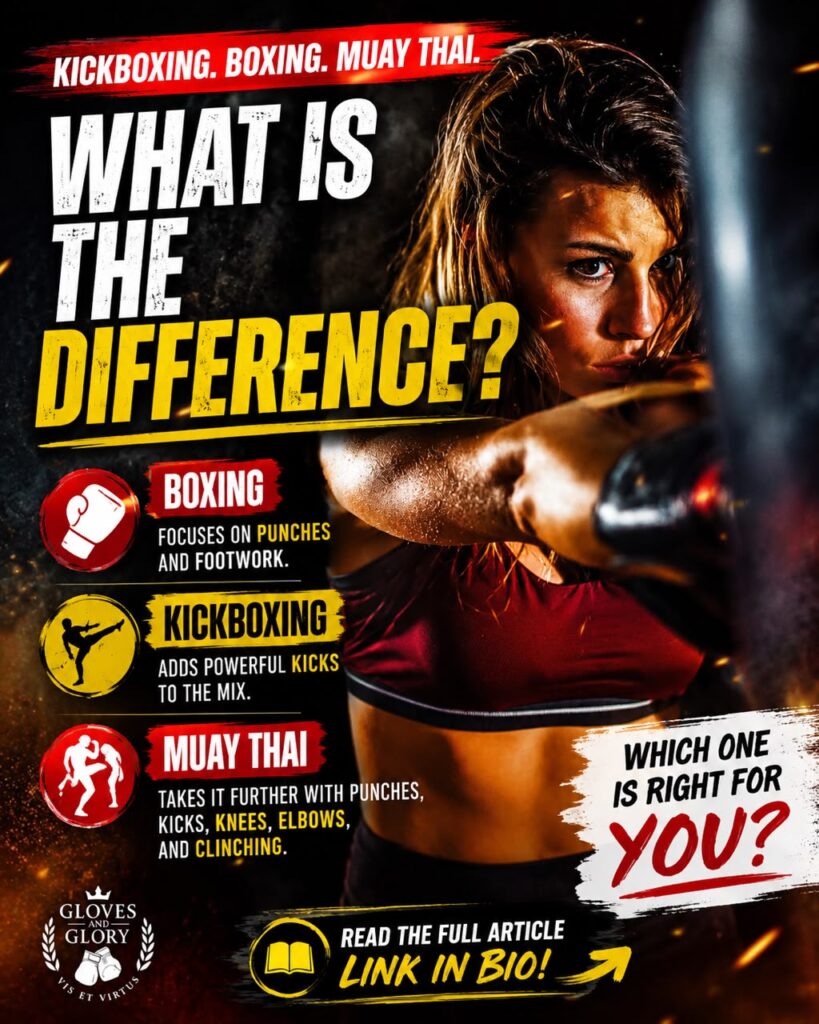
What Is the Difference Between Boxing, Kickboxing, and Muay Thai?
If you are new to combat sports, you may have heard people use the terms Boxing, Kickboxing, and Muay Thai interchangeably. While all three are striking based martial arts that involve hitting an opponent, they differ significantly in techniques, rules, training methods, and overall fighting style.
Whether your goal is to improve fitness, lose weight, learn self-defense, or to compete in the ring, understanding the differences between these disciplines can help you choose the right path for your objectives and personal goals.
Boxing: The Sweet Science
Boxing is one of the oldest and most respected combat sports in the world. Often referred to as “The Sweet Science,” boxing focuses exclusively on punches and defensive movement.
Why do they called boxing “The Sweet Science”?
The nickname “The Sweet Science” for boxing dates back to the 19th century and was popularized by British sportswriter and boxing enthusiast Pierce Egan.
At first, the term might sound strange because boxing is a combat sport, but it refers to the fact that successful boxing is based on skill, strategy, timing, and intelligence, not just brute force.
Most boxing punches are simply a variations of these four basic punches
- Jabs
- Crosses
- Hooks
- Uppercuts
Since punches are the only legal strikes, boxers spend countless hours developing hand speed, timing, accuracy, footwork, and defensive skills.
Key Characteristics of Boxing
- Only punches are allowed.
- No kicks, knees, elbows or clinching attacks.
- Strong emphasis on movement and positioning.
- Highly technical defensive systems.
- Fast-paced exchanges and counterattacks.
Boxing training typically includes:
- Shadowboxing
- Footwork
- Heavy bag work
- Pad work
- Skipping rope
- Sparring
- Strength and conditioning
- Strategies and timing
Benefits of Boxing
Many people start boxing because it provides an excellent cardiovascular workout while teaching valuable self-defense skills.
Benefits include:
- Improved cardiovascular fitness
- Increased upper-body endurance
- Better hand-eye coordination
- Enhanced reflexes
- Increased confidence
- Effective stress relief
For those who enjoy fast hands, strategic movement, and technical striking, boxing can be an excellent choice.
Kickboxing: The Best of Hands and Feet
Kickboxing combines traditional boxing techniques with powerful kicking attacks. Developed through the influence of karate, Muay Thai, and western boxing, kickboxing has become one of the most popular combat sports and fitness activities worldwide.
Unlike boxing, kickboxers can strike using both their hands and feet.
Common techniques include:
- Jabs
- Crosses
- Hooks
- Uppercuts
- Roundhouse kicks
- Front kicks
- Side kicks
- Low kicks
- Back kicks
Because both punches and kicks are involved, kickboxing requires greater coordination and reflects than boxing alone.
Key Characteristics of Kickboxing
- Uses punches and kicks.
- Faster pace and more explosive compared to Muay Thai.
- Limited clinch fighting.
- Focus on combinations, speed and movement.
- Strong emphasis on fitness and conditioning.
Kickboxing training often includes:
- Pad work
- Heavy bag drills
- Technical combinations
- Partner drills
- Sparring
- Strength and Conditioning
Benefits of Kickboxing
Kickboxing is one of the most effective full-body workouts available.
Benefits include:
- High calorie expenditure
- Improved cardiovascular health
- Increased flexibility and mobility
- Enhanced coordination
- Better lower-body strength
- Improved agility and balance
Many people choose kickboxing because it offers a balance between practicality, excitement, and fitness.
Muay Thai: The Art of Eight Limbs
Muay Thai originated in Thailand and is often called the “Art of Eight Limbs.” Unlike boxing and kickboxing, Muay Thai allows fighters to use eight points of contact:
- Two fists
- Two elbows
- Two knees
- Two shins/feet
This makes Muay Thai one of the most complete striking systems in the world.
In addition to punches and kicks, Muay Thai fighters can use devastating knees and elbows while controlling opponents in the clinch.
Key Characteristics of Muay Thai
- Uses punches, kicks, knees, and elbows.
- Allows clinch fighting.
- Strong emphasis on power and durability.
- Focus on balance and timing.
- Highly effective for self-defense.
The clinch is one of the defining features of Muay Thai. Fighters can control their opponent’s posture while delivering knees and setting up strikes.
Typical Muay Thai training includes:
- Pad work
- Bag work
- Clinch drills
- Sparring
- Conditioning
- Technical drill
Benefits of Muay Thai
Muay Thai develops both physical and mental toughness.
Benefits include:
- Full-body conditioning
- Increased strength and endurance
- Improved self-defense skills
- Better discipline and focus
- Enhanced confidence
- Greater mental resilience
Because it uses multiple weapons and ranges of attack, many consider Muay Thai one of the most versatile and dangerous striking arts available.
Comparing Boxing, Kickboxing, and Muay Thai
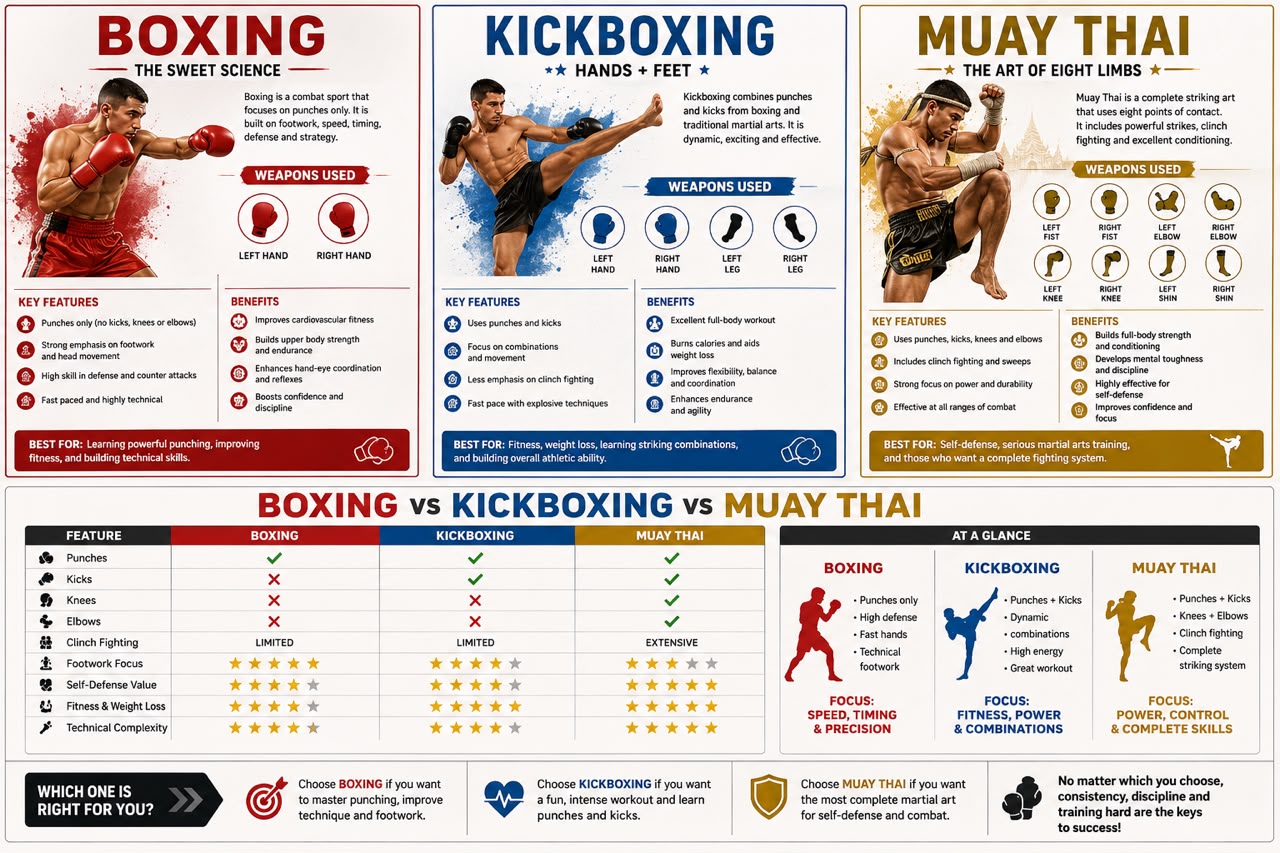
While all three sports improve fitness and self-defense capabilities, each offers a unique training experience.
Boxing
Strengths
- Exceptional punching skills
- Superior footwork
- Excellent defensive techniques
- Fast hand speed
Best For
- Beginners
- Fitness enthusiasts
- People interested in mastering punches
Kickboxing
Strengths
- Combination of punches and kicks
- Excellent calorie-burning workout
- Dynamic and exciting training
- Well-rounded striking development
Best For
- Weight loss
- General fitness
- Learning practical striking skills
Muay Thai
Strengths
- Uses punches, kicks, knees, and elbows
- Effective clinch fighting
- Strong self-defense application
- Complete striking system
Best For
- Serious martial arts practitioners
- Competitive fighters
- Those seeking comprehensive striking skills
Which One Should You Choose?
The truth is that there is no single “best” combat sport. The right choice depends on your personal goals.
Choose Boxing if
- You want to develop exceptional punching skills.
- You enjoy movement, strategy, and technical precision.
- You prefer a sport focused entirely on hands.
Choose Kickboxing if
- You want a fun and energetic full-body workout.
- You want to learn both punches and kicks.
- Your goal is fitness and weight loss.
Choose Muay Thai if
- You want the most complete striking system.
- You are interested in self-defense.
- You enjoy learning a wider variety of techniques.
Many athletes eventually cross-train in multiple disciplines because each sport develops different strengths and skills.
Start Your Martial Arts Journey with Gloves & Glory
At Gloves & Glory, we believe combat sports are for everyone, regardless of age, fitness level, or experience. Whether you are looking to lose weight, improve fitness, build confidence, learn self-defense, or compete, our experienced coaches are here to guide you every step of the way.
We offer structured training programs in Boxing, Kickboxing, and Muay Thai designed for beginners and experienced practitioners alike. Our supportive community, professional coaching, and progressive training system help members achieve their goals in a safe and motivating environment.
The best way to discover which style suits you is to experience it for yourself. Step into the gym, try a class and begin your journey toward becoming stronger, fitter and more confident.

Continue Your Journey
Explore more insights, training tips, techniques, and stories from the world of combat sports.